

Online-Vortag am Do, 16. Mai 2024, 18:00 Uhr

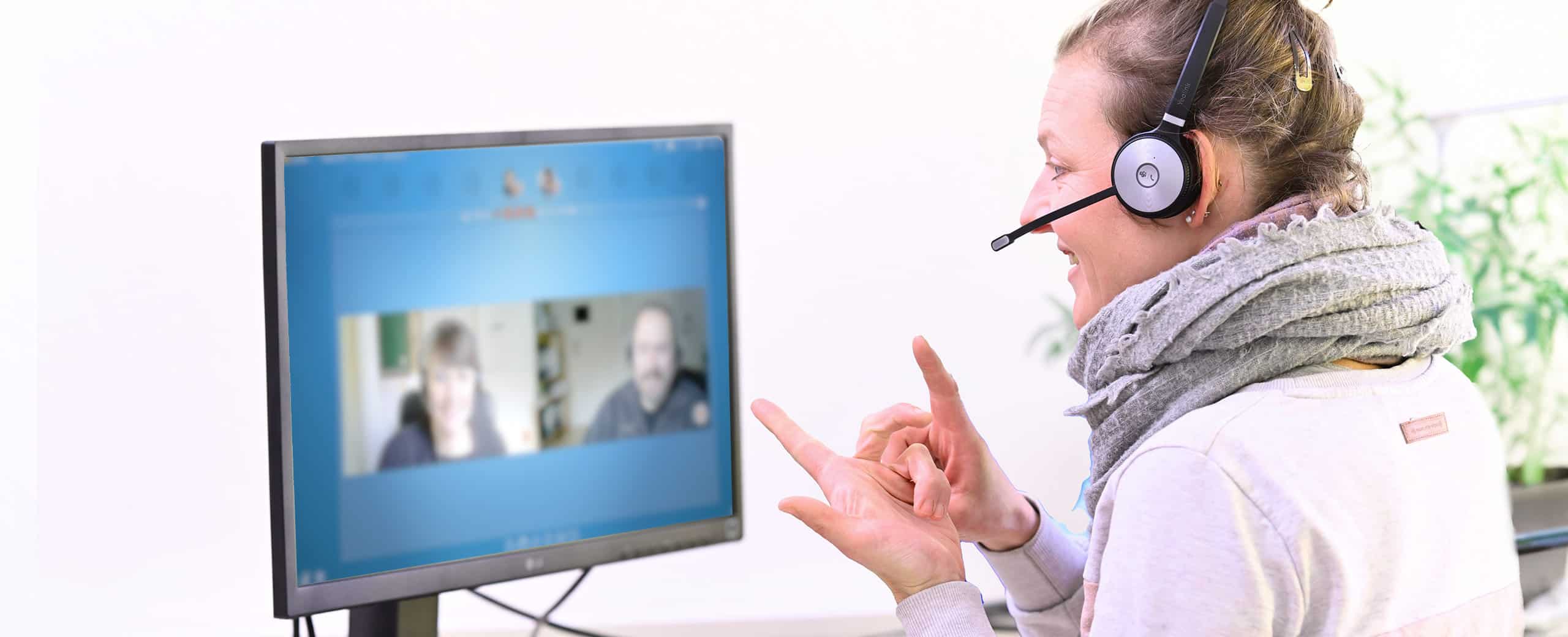
Logopädin Janine Sauer-Crepulja gibt in unserer KST Online-Akademie einen detaillierten Einblick in unsere Stottertherapie für Kinder von 9-12 Jahren.




In Kooperation mit:

Kasseler Stottertherapie für Kinder, Jugendliche & Erwachsene seit 1996
Stottern erfolgreich behandeln
Wir helfen Stotternden
Sie suchen eine Stottertherapie, die nachweislich funktioniert? Die hilft Stottern zu kontrollieren und langfristig flüssiger zu sprechen? Die Kasseler Stottertherapie hat seit 1996 bisher ca. 4.500 Kinder, Jugendliche und Erwachsene aus Deutschland, Österreich und der Schweiz erfolgreich auf dem Weg zu flüssigerem Sprechen begleitet.
Viele unserer Therapeutinnen und Therapeuten sind oder waren selbst betroffen und kennen die Herausforderungen, die mit Stottern verbunden sind aus ihrem eigenen Leben.
Auf Basis einer ganzheitlichen Methode arbeiten wir in Intensivkursen mit einem abwechslungsreichen Konzept aus Präsenz-, Online-, Einzel- und Gruppentherapie.
Preisgekrönt, von Krankenkassen anerkannt und von Ärzten empfohlen
Die Kasseler Stottertherapie wird von nahezu allen deutschen Krankenkassen bezahlt und führt nachweislich zu flüssigerem Sprechen.
Das Konzept der Kasseler Stottertherapie wird nach den medizinischen S3-Leitlinien als eines der wirksamsten Behandlungsformen von Stottern „stark empfohlen“1.
Diese innovative Therapieform wurde unter anderem mit dem „Medizin-Management-Preis“, dem renommierten „Eugen-Münch-Preis“ und dem “E-Health Award” ausgezeichnet.
1 Deutsches Ärzteblatt | Jg. 114 | Heft 22–23 | 5. Juni 2017, S. 385
Für Jugendliche und Erwachsene ab 13 Jahren gibt es eine reine Online-Therapie. Diese wurde speziell für Betroffene entwickelt, die von zu Hause aus therapiert werden wollen und erfordert als reine Online-Therapie keinen Selbstkostenanteil, wie Reisekosten, Verpflegung oder Übernachtung.
Für alle unsere Stottertherapien wird die vorangehende Diagnostik online durchgeführt. Auf diese Weise kann jeder ganz bequem von zu Hause aus ohne weitere Kosten an der Diagnostik teilnehmen.
Für jedes Alter die passende Stottertherapie:




Die Kasseler Stottertherapie: Flüssiger sprechen, freier leben!
Der Kern der Kasseler Stottertherapie basiert auf den Schlüsselelementen Intensivtherapie, Einzel- und Gruppentherapie, langfristiger Nachsorge und softwarebasiertem Sprechtraining. Diese erfolgt sowohl in Präsenz- als auch in Online-Sitzungen und dabei sind alle Elemente sorgfältig auf die jeweilige Altersgruppe und die damit verbundene Sprech- und Lebenssituation bestmöglich abgestimmt.
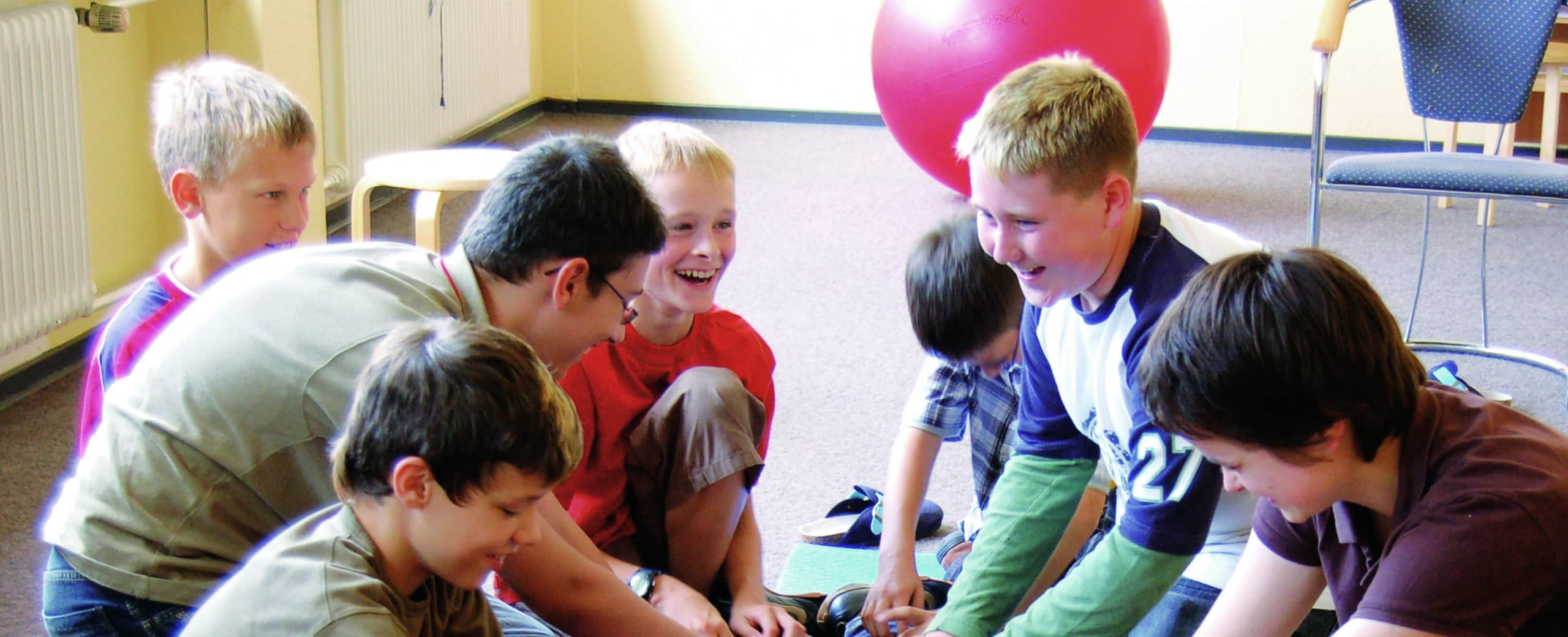
Mit Gleichaltrigen und Gleichgesinnten macht die Therapie nicht nur mehr Spaß, sie erzeugt auch eine intensivere Gruppendynamik und unterstützt den Therapiefortschritt.
 Vor,
Vor,  während und
  nach der Kasseler Stottertherapie
 Jugendliche und Erwachsene
  Kinder
 Franka
Idee und Gründung der Kasseler Stottertherapie
Die Geschichte der Kasseler Stottertherapie beginnt mit ihrem Gründer Dr. Alexander Wolff von Gudenberg. Als Kind war er selbst sehr stark von Stottern betroffen und hat in über 20 Jahren insgesamt 12 Stottertherapien in verschiedenen Ländern durchlaufen (u. a. in USA, Australien und Israel). Über alle Hindernisse hinweg hielt er an seinem Traum fest, Arzt zu werden und eine neue, zukunftsweisende Stottertherapie zu entwickeln. Seine ärztliche Ausbildung und die Erfahrungen als Betroffener kombinierte er mit den wirksamsten Elementen, die er in seinen eigenen Therapien erfuhr. Dies bildete das Fundament seines Therapiekonzepts und so gründete er 1996 das Institut der Kasseler Stottertherapie.
Die größte Stottertherapie im deutschsprachigen Raum
Bis heute wurden in Deutschland, Österreich und der Schweiz mehr als 4.500 Stotternde nach dem Konzept der Kasseler Stottertherapie behandelt. Die KST ist damit die größte Einrichtung für Stotternde im deutschsprachigen Raum. Zahlreiche wissenschaftliche Publikationen belegen den Erfolg der Therapie.
Weltweit können nur ganz wenige Therapiekonzepte so viele Langzeitstudien mit einer so hohen Evidenz aufweisen, wie die Kasseler Stottertherapie.
Prof. Dr. Harald Euler, Universität Kassel
Wissenschaftlich belegte Wirksamkeit: Erfolge in Zahlen
Die Erfolge der Kasseler Stottertherapie wurden von Beginn an durch unabhängige Wissenschaftler untersucht: 93 % der Patienten zeigen direkt nach der Therapie signifikante Verbesserungen, 89 % noch ein Jahr nach der Therapie und 75 % der Patienten profitieren auch noch 3 Jahre nach Therapieende.
Insbesondere der langfristige und somit nachhaltige Erfolg ist für uns entscheidend, da nur dieser eine echte Steigerung der Lebensqualität mit sich bringt.
0

Spontaner Erfolg
0

Anhaltender Erfolg
0

Langfristiger Erfolg
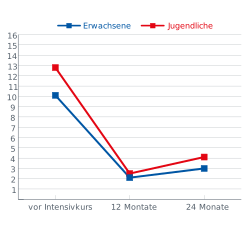
Abb. 1: Objektive Stotterdaten: Prozent gestotterter Silben (Auszählung) für Erwachsene und Jugendliche über drei Messzeitpunkte.2
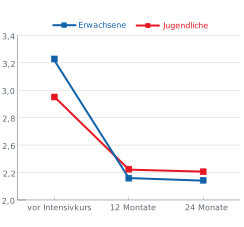
Abb. 2: Subjektive Stotterdaten: Bewertungen von negativen Emotionen von Erwachsenen und Jugendlichen über drei Messzeitpunkte.2
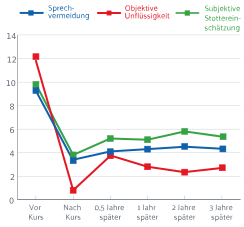
Abb. 3: Langfristige signifikante Verbesserung bei Sprechvermeidung, objektive Unflüssigkeit und subjektive Stottereinschätzung über 3 Jahre bei Jugendlichen und Erwachsenen.3
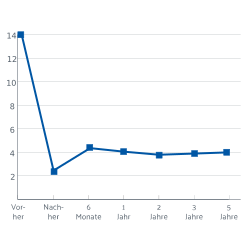
Abb. 4: Langfristig signifikante und nachhaltige Verbesserung von objektiv gemessenen Unflüssigkeiten (Auszählung von Silben) über den Verlauf von 5 Jahren.3,4
2Harald Euler et. al., Kann eine methodenintegrierende globale Sprechrestrukturierung negative Emotionen mindern? Logos, 2016, 24: 84-93.
3Harald Euler et. al., Computergestützte Therapie bei Redeflussstörungen. Die langfristige Wirksamkeit der Kasseler Stottertherapie. Sprache·Stimme·Gehör, 2009, 33: 193 – 201.
4Bernadette Talartschik, Stottern und das Konzept der Kasseler Stottertherapie. forum HNO, 2014, 16: 138-144.
Videos

Mit dem Laden des Videos akzeptieren Sie die Datenschutzerklärung von YouTube.
Mehr erfahren
Mit dem Laden des Videos akzeptieren Sie die Datenschutzerklärung von YouTube.
Mehr erfahren